



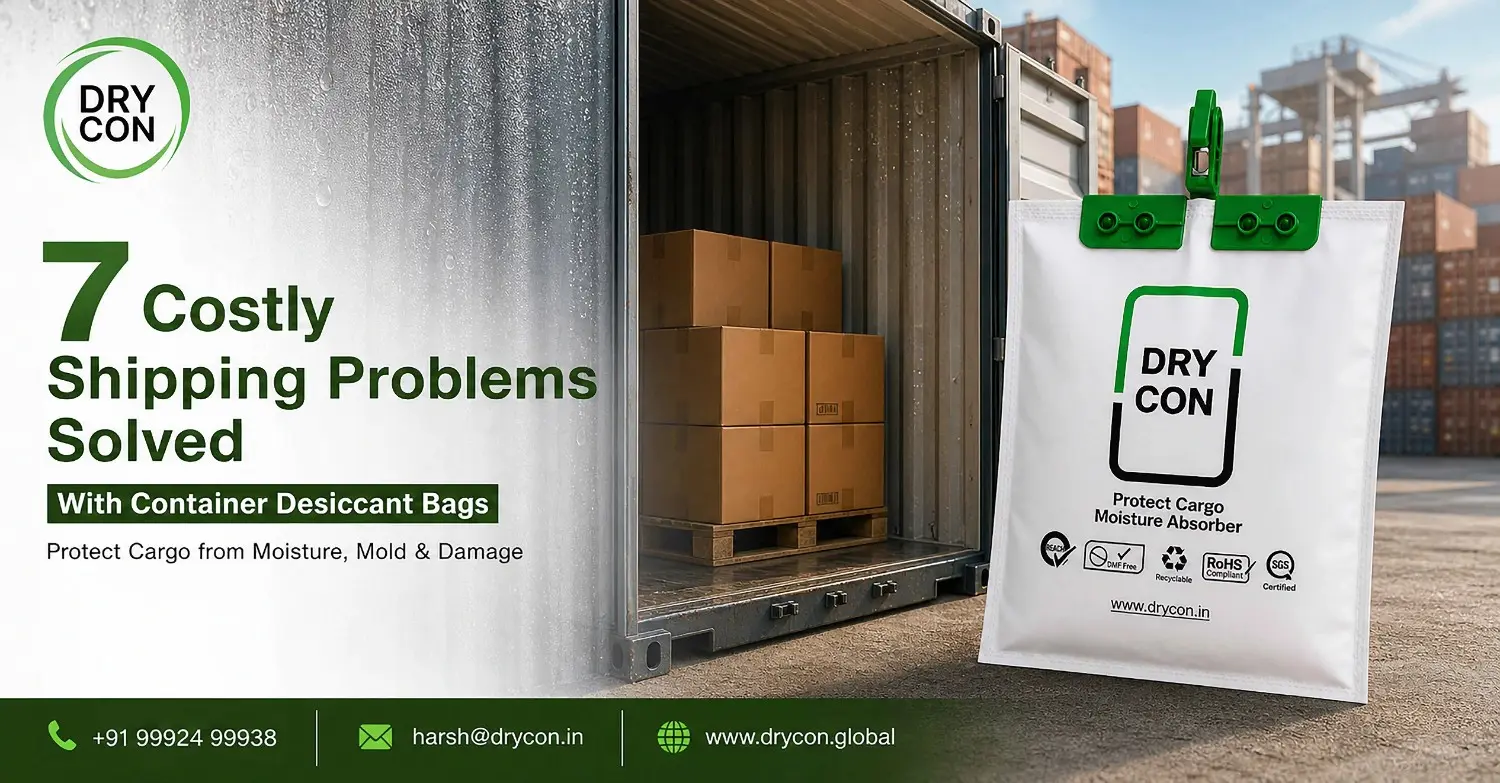
Shipping goods in containers looks simple from the outside. You pack the cargo, seal the doors, and send it across oceans. But inside the container, a silent problem starts to grow. Moisture builds up. Temperature changes. Humidity rises. This leads to a serious issue called container rain.
This is where container desiccant bags become essential. They are one of the most reliable container moisture control solutions for shipping. Exporters, logistics teams, and manufacturers across India now use them to protect cargo during long journeys.
If you are wondering why use desiccant bags in container shipping, this guide explains the real problems they solve and how they protect your cargo.
Understanding the Hidden Moisture Problem in Containers
A shipping container travels through hot days, cold nights, sea air, and changing climates. These changes create condensation inside the container. Water droplets form on the ceiling and walls. This water then falls on the cargo. This is known as container rain.
Without proper humidity control methods, your cargo is at risk even when the container looks sealed and safe. This is why exporters are turning to desiccant bags for export packaging as a standard practice.
Problem 1: Container Rain Damages Packaging and Products
How to prevent container rain during shipping is one of the most common concerns for exporters. When condensation forms, it drips onto cartons, wooden pallets, and products. Cartons become weak. Labels get damaged. Products inside may get wet.
Container desiccant bags absorb the excess moisture in the air before it turns into water droplets. They stop condensation from forming in the first place. This is a simple yet powerful container humidity control method.
Problem 2: Mold Growth on Cargo During Transit
Mold needs only two things to grow. Moisture and time. Long shipping routes provide both. Many exporters face losses because of mold on textiles, leather goods, food products, and paper packaging.
If you want to understand how desiccants prevent mold in containers, the answer is simple. They reduce the humidity level inside the container. Mold cannot grow when moisture is under control. This is why cargo protection using container desiccants is becoming common in export industries.
Problem 3: Rust and Corrosion on Metal Goods
Metal products like tools, machinery parts, automotive components, and hardware are highly sensitive to moisture. Even small amounts of humidity can cause rust during sea transport.
Using bulk desiccant bags for cargo protection helps maintain a dry atmosphere. This prevents corrosion and protects the surface finish of metal goods. For many industries, this is the best desiccant for shipping containers India exporters trust.
Problem 4: Damage to Wooden Pallets and Crates
Wood absorbs moisture from the air. When this happens inside a container, pallets swell and weaken. This affects stacking and product safety.
Wet wood can also transfer moisture to cartons and goods. Container desiccant bags control the air moisture and keep wooden packaging dry. This improves the overall stability of the cargo during transit.
Problem 5: Spoilage of Food, Pharma, and Organic Products
Food items, spices, grains, pharmaceuticals, and herbal products are highly sensitive to humidity. Moisture can spoil these goods or reduce their shelf life before they even reach the buyer.
Using desiccant bags for export packaging ensures safe transport of sensitive cargo. It is a reliable container moisture control solution for shipping perishable and moisture-sensitive goods.
Problem 6: Damage to Cartons, Labels, and Branding
Wet cartons look damaged and weak. Labels peel off. Ink spreads. Barcodes become unreadable. Even if the product inside is safe, damaged packaging creates a bad impression for buyers.
Container desiccant usage guide for exporters always recommends placing desiccants to protect both products and packaging. Good packaging condition reflects good quality.
Problem 7: Financial Losses Due to Rejected Shipments
When cargo reaches the destination with moisture damage, buyers may reject the shipment. This leads to losses, return shipping, and reputation damage.
A small investment in container desiccant bags prevents large financial losses. This is why many exporters now include them as part of their standard container humidity control methods.
How Container Desiccant Bags Work?
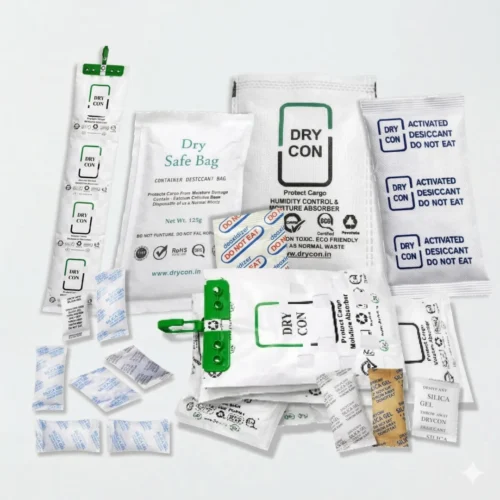
Container desiccant bags are filled with moisture-absorbing materials. These materials pull water vapor from the air and lock it inside. They can absorb moisture for the entire journey, even up to 60 days or more.
By keeping the air dry, they stop condensation, mold, rust, and packaging damage. This is the science behind cargo protection using container desiccants.
Where to Place Desiccant Bags Inside the Container?
A proper container desiccant usage guide for exporters suggests:
- Hang desiccant bags on the side walls
- Place some near the container doors
- Distribute evenly based on container size
- Use more bags for long routes and high humidity seasons
Correct placement improves the performance of bulk desiccant bags for cargo protection.
Choosing the Best Desiccant for Shipping Containers India
Indian exporters ship goods across humid sea routes. Choosing the best desiccant for shipping containers India is important.
Look for desiccant bags that:
- Have high absorption capacity
- Last for long transit periods
- Are leak proof
- Are easy to hang inside containers
High quality container desiccant bags are designed for export conditions.
When Should You Use Desiccant Bags in Container Shipping?
You should use them when shipping:
- Textiles and garments
- Leather products
- Machinery and metal parts
- Food products and spices
- Paper goods and packaging material
- Electronics
- Wooden furniture and handicrafts
These goods are highly affected by moisture. This clearly explains why use desiccant bags in container shipping.
Container Humidity Control Methods Exporters Trust
Exporters use many methods like plastic wrapping, vacuum packing, and special cartons. But these methods do not control the air inside the container.
Only container desiccant bags directly control the humidity inside the container. That is why they are trusted as one of the most effective container moisture control solutions for shipping.