



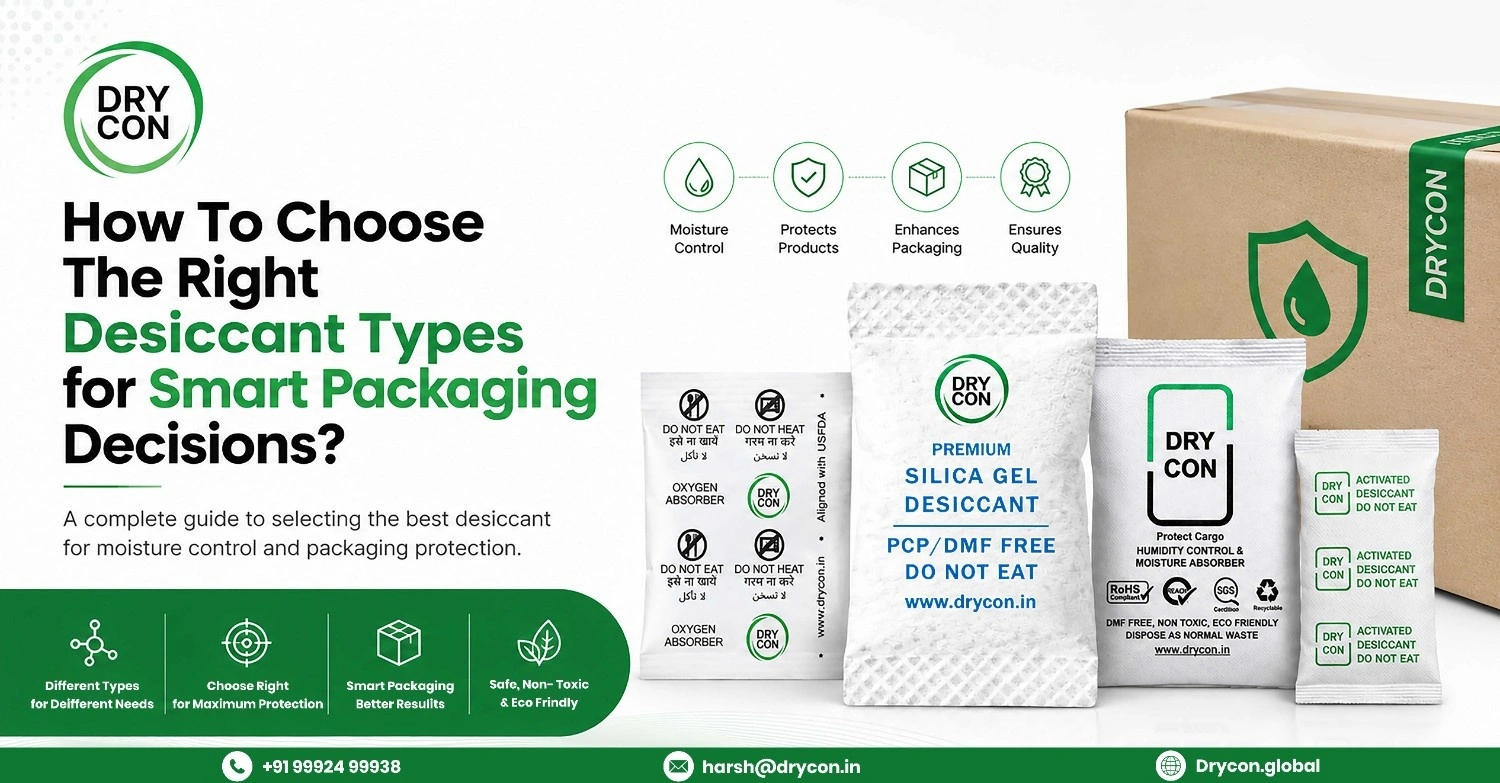
Moisture damage is slow and silent. You may not see it while packing. But you will see it when the cargo reaches the buyer. Rust on tools. Fungus on cartons. Wet labels. Bad smell. Rejected shipments. This is why learning about Desiccant types is important for every exporter, manufacturer, and packaging team.
In this detailed guide, we will discuss some important points related to desiccant types.
- The types of desiccants used in packaging
- A clear silica gel vs clay vs calcium chloride desiccant comparison
- A practical desiccant absorption capacity comparison
- The real container desiccant vs silica gel comparison
- Which desiccant works best for high humidity
- A simple desiccant selection guide for different industries
- Exactly how to choose the right desiccant for packaging and export
What Are the Main Desiccant Types Used in Packaging?
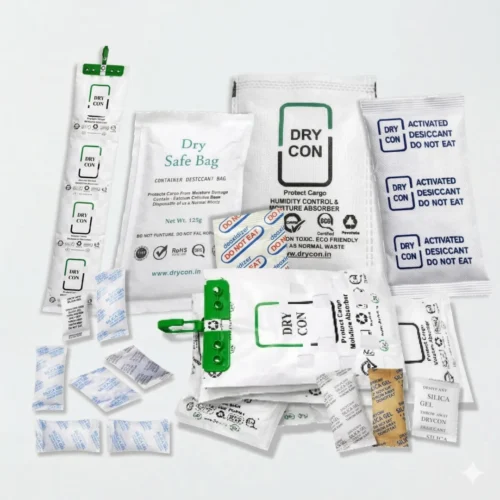
There are several moisture absorber types for export packaging. The following are the most widely used desiccant types across industries:
Desiccant Type |
Where It Is Used |
Performance |
|---|---|---|
| Silica Gel | Electronics, food packs, pharma cartons | Medium |
| Clay (Montmorillonite) | Garments, leather, cartons | Low |
| Calcium Chloride | Containers, export shipments | Very High |
| Molecular Sieve | Pharma, diagnostics, precision items | High |
These define the real industrial desiccant types and uses you see in packaging today.
Also Read : 11 Proven Benefits of Desiccants in Pharmaceuticals for Drug Stability
Why You Must Understand Desiccant Types Before Packing?
A silica gel pouch inside a carton cannot control the air inside a 40-foot shipping container. This single misunderstanding can cause significant moisture-related cargo damage worldwide.
Most packaging teams know desiccants are important. But they do not clearly understand how to choose the right desiccant for packaging. Especially when they have to select based on shipment size, humidity exposure, and transit time. As a result, the wrong desiccant types are used for the wrong purpose.
Across Asia, Middle East, and Africa, containers often experience higher relative humidity. Sometimes relative humidity goes above 85% for several weeks.
Now imagine placing only silica gel pouches inside cartons and expecting them to handle this environment. This is where the confusion in types of desiccants used in packaging becomes costly.
When the wrong desiccant is selected:
- Metal parts begin to rust within days
- Corrugated cartons lose strength and collapse
- Fungus forms on leather and garments
- Food and pharma labels peel off
- Export buyers reject shipments due to visible moisture signs
These problems are not because desiccants fail. They happen because the wrong moisture absorber types for export packaging are used.
Understanding Silica Gel vs Clay vs Calcium Chloride Desiccant in Real Packaging
When people compare silica gel vs clay vs calcium chloride desiccant, they often look only at price or availability. The real difference is not price. The real difference is how much moisture each desiccant can handle and where it is meant to work.
Some desiccants are made for small boxes. Some are made for large containers filled with humid air. If you use a small pack solution for a large space problem, moisture damage is guaranteed. This is why understanding types of desiccants used in packaging is important before selecting one.
Also Read : DryCon Bag vs Traditional Desiccants: A Practical Guide for Exporters and Shippers
Silica Gel vs Clay vs Calcium Chloride Desiccant
Property |
Silica Gel |
Clay Desiccant |
Calcium Chloride Desiccant |
|---|---|---|---|
| Absorption Capacity | 30 to 40% of its weight | 15 to 20% of its weight | 200%+ of its weight |
| Designed For | Small sealed packs | Basic cartons | Shipping containers |
| Performance in High Humidity | Moderate | Poor | Excellent |
| Duration of Effect | Short | Short | Long |
| Controls Container Air | No | No | Yes |
| Prevents Container Rain | No | No | Yes |
| Typical Use | Electronics, food, pharma packs | Garments, leather cartons | Export and sea shipments |
So, What Does This Mean for You?
- If your product is inside a small carton, silica gel works.
- If your shipment is inside a container for 30 to 60 days, silica gel and clay will fail.
- If humidity is high during transit, only calcium chloride based solutions can handle the load.
This is the practical answer to which desiccant works best for high humidity.
Desiccant Absorption Capacity Comparison That Changes Decisions
Many packaging teams underestimate the importance of a desiccant absorption capacity comparison. They assume all desiccants absorb moisture in the same way. They do not.
Desiccant Type |
Moisture It Can Absorb |
What Happens After Saturation |
|---|---|---|
| Silica Gel | Limited absorption | Stops working once full |
| Clay | Very limited absorption | Stops working quickly |
| Calcium Chloride | Very high absorption | Continues absorbing and converts moisture into liquid safely |
Inside a container, moisture keeps forming daily due to temperature changes. A desiccant that stops working after a few days is not useful for export shipping. This is why calcium chloride is known as the best desiccant for moisture control in shipping. Also it is widely used as one of the main moisture absorber types for export packaging.
Container Desiccant vs Silica Gel Comparison for Exporters
This is the most important comparison for anyone involved in exports.
Protection Area |
Silica Gel |
Container Desiccant |
|---|---|---|
| Protects product inside carton | Yes | No |
| Protects air inside container | No | Yes |
| Works for long sea transit | No | Yes |
| Stops condensation from container ceiling | No | Yes |
| Suitable for export logistics | Limited | Ideal |
You do not choose between silica gel and container desiccant. You use them for different purposes. Silica gel protects the product. Container desiccant protects the environment around the product. This understanding forms the base of a smart desiccant selection for different industries.
Also Read : 7 Costly Shipping Problems Solved by Container Desiccant Bags
Industrial Desiccant Types and Uses Across Industries
Different industries face different moisture risks. So they require different industrial desiccant types and uses.
Industry |
Moisture Risk |
Recommended Desiccant Type |
|---|---|---|
| Electronics | Corrosion | Silica Gel |
| Pharma | Sensitive humidity control | Molecular Sieve |
| Food | Spoilage | Silica Gel |
| Leather and Garments | Fungus | Clay Desiccant |
| Machinery and Metal Parts | Rust | Calcium Chloride |
| Export Logistics | Container rain | Calcium Chloride |
Instead of guessing, you select desiccants based on actual risk.
How to Choose the Right Desiccant for Packaging Using Simple Questions?
If you are still unsure how to choose the right desiccant for packaging, ask:
- Am I protecting a small box or a large container?
- Is my shipment exposed to high humidity for many days?
- Is the cargo sensitive to rust, fungus, or label damage?
- Is this local storage or international shipping?
Your answers will automatically point to the right desiccant types.
For example, if you are packing electronics inside retail cartons for local dispatch, silica gel is usually enough. But if the same cartons are loaded into a container for a 45 day sea journey, silica gel alone is not enough. You now also need a container level solution.
This is where many businesses make mistakes. They select desiccants based on habit, not based on shipping conditions. They use the same pouch everywhere and expect the same result.
A simple way to think is this:
- Pouch desiccants protect the product
- Container desiccants protect the environment around the product
Once you get a clear understanding of the difference, picking the right moisture absorber no longer feels complicated. It becomes much easier to use a practical desiccant selection guide for different industries and choose the best option for export packaging without second-guessing your decision.