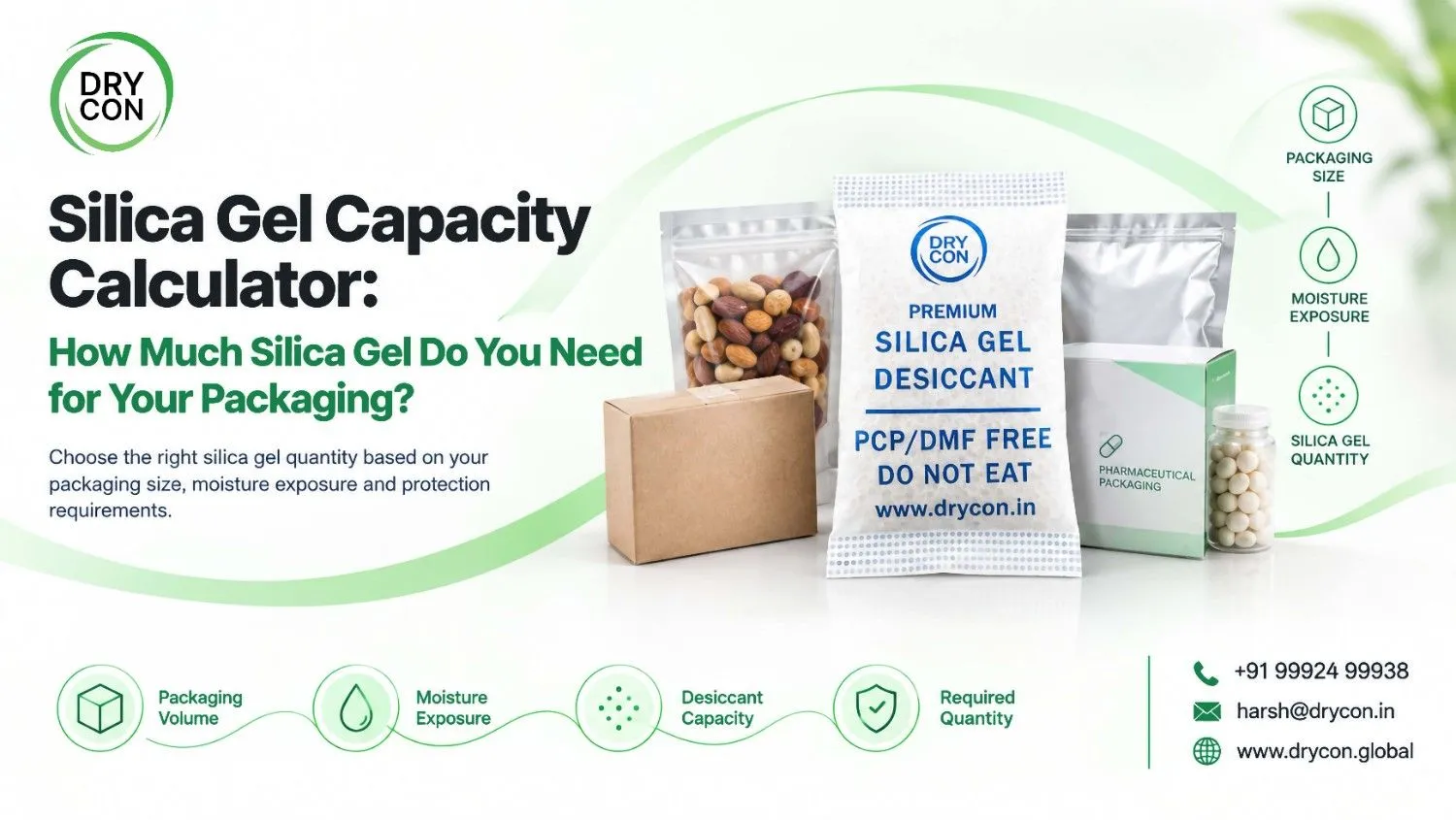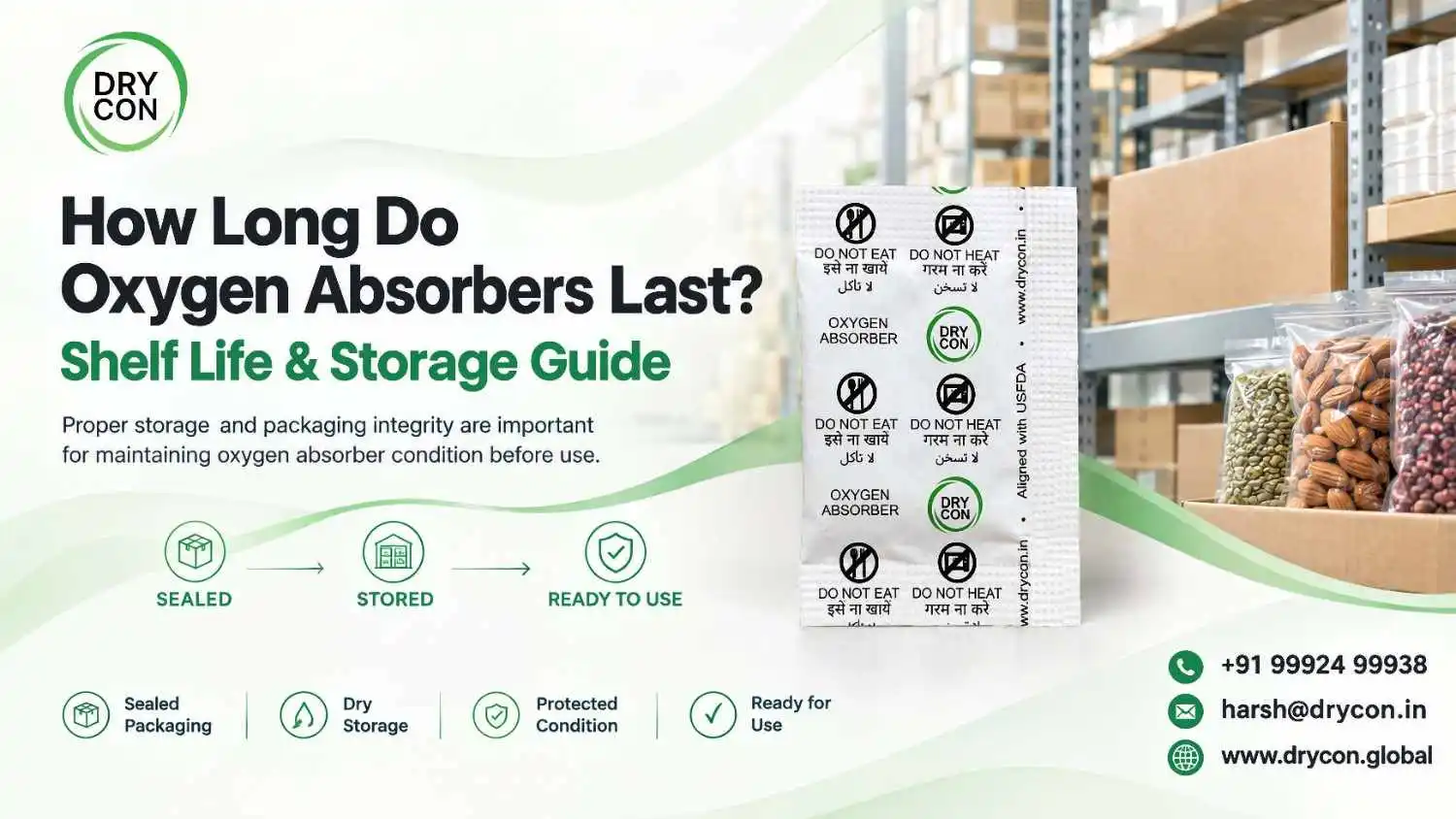




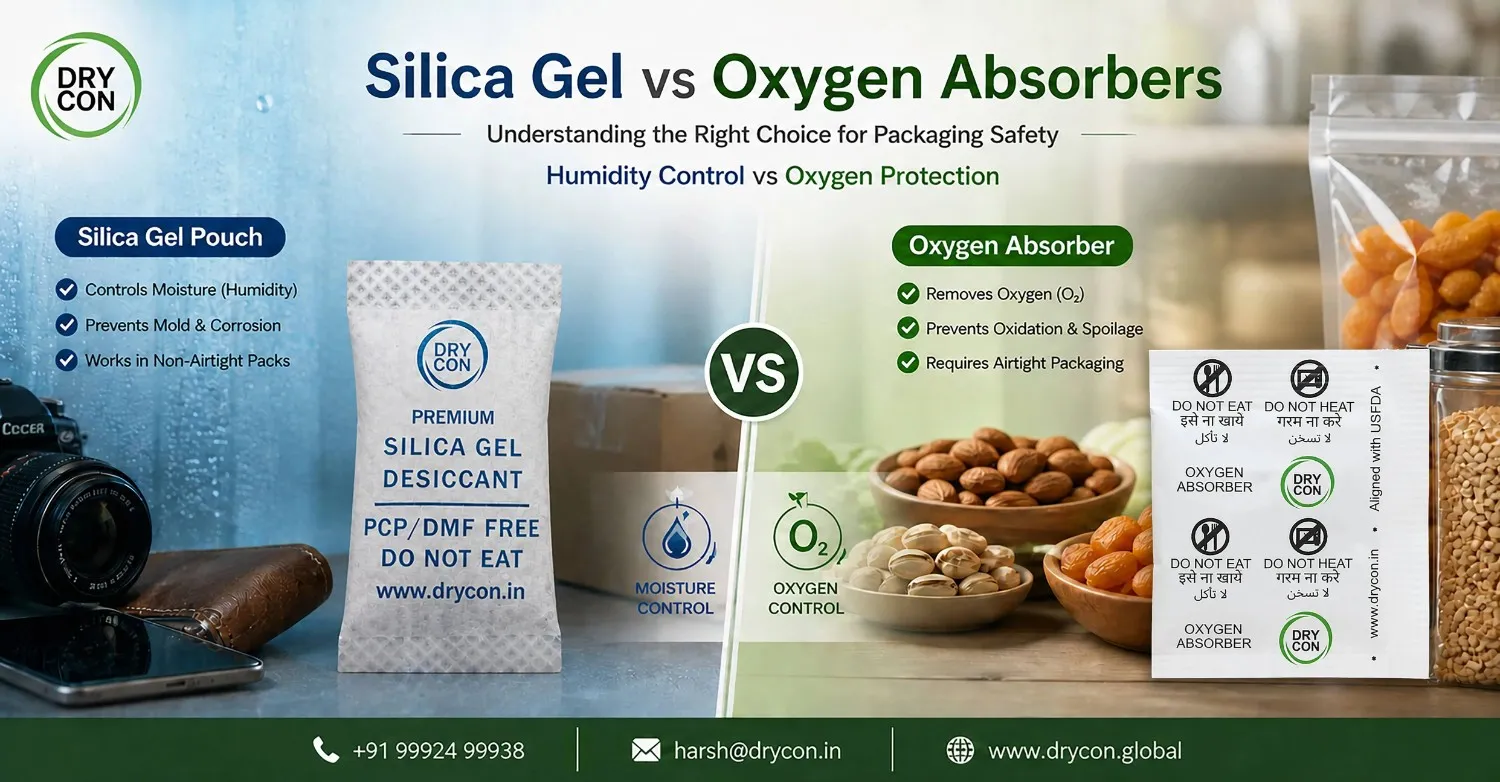
In packaging, selecting from silica gel pouch vs oxygen absorbers often confuses people. A silica gel pouch keeps moisture under control. Whereas oxygen absorbers remove oxygen from the pack. These may sound similar, so many assume they do the same job. But reality is they are different. A wrong selection can lead to mold, spoiled food, shorter shelf life, and avoidable shipping or storage losses.
So it is important you understand the difference of Silica Gel Pouch vs Oxygen Absorbers. It will thus become much easier to protect your products and choose the right solution for your packaging.
Silica Gel vs Oxygen Absorbers: The Core Difference at a Glance
This table is the simplest way to understand the oxygen absorber vs desiccant comparison.
Factor |
Silica Gel Pouch |
Oxygen Absorber |
|---|---|---|
| What it removes | Moisture (humidity) | Oxygen (O₂) |
| Purpose | Prevent condensation, mold, and corrosion | Prevent oxidation, rancidity, and microbial growth |
| Works against | Humidity | Air oxygen |
| Used in | Electronics, leather, pharmaceuticals, shipping containers | Food packaging, sealed pouches, long-term storage |
| Reaction type | Physical adsorption | Chemical reaction |
| Needs airtight packaging | No | Yes |
| Category | Desiccant | Oxygen scavenger |
How It Works: Silica Gel vs Oxygen Absorbers
1. Silica Gel Pouch: Moisture Control Mechanism
A Silica gel pouch is a type of desiccant made from porous material. It absorbs water vapor from the air and reduces humidity inside the package. It helps to:
- Prevent condensation
- Stop mold and mildew
- Protect metal parts from rust
- Keep products dry during shipping
This is why it is used when moisture is the main concern.
2. Oxygen Absorber: Removes Oxygen
An oxygen absorber contains iron powder. It reacts with oxygen and removes it almost completely, inside a sealed packaging . It helps to:
- Prevent oxidation
- Stop rancidity in food and oils
- Control microbial growth
- Increase food shelf life
This shows how silica gel and oxygen absorbers work in very different ways.
Also Read : 11 Proven Benefits of Desiccants in Pharmaceuticals for Drug Stability
Difference Between Silica Gel and Oxygen Absorber in Real Packaging
Many packaging problems happen when the wrong sachet is used. People use silica gel when oxygen control is needed, or oxygen absorbers when moisture control is needed. Let’s understand various requirements to understand the need of the right packaging option.
Use Case |
Right Choice |
|---|---|
| Packed food, spices, dry snacks | Oxygen absorber |
| Leather goods, garments, shoes | Silica gel pouch |
| Electronics, tools, auto parts | Silica gel pouch |
| Vacuum-sealed food pouches | Oxygen absorber |
| Shipping containers | Silica gel / container desiccant |
| Long-term grain storage | Oxygen absorber |
| Pharma bottles | Silica gel pouch |
In food packs, the choice between silica gel vs oxygen absorber is very important. Silica gel cannot stop food from oxidizing and oxygen absorbers cannot stop moisture condensation. For dry foods like nuts, spices, jerky, flour, and snacks, oxygen is the main problem. So, oxygen absorbers are necessary.
For electronics and machinery, oxygen is not harmful. But humidity can cause the problem. That is why for such packaging, a silica gel pouch is the right choice.
During long shipping journeys, temperature changes increase humidity inside containers. In this case, silica gel or Container desiccants are needed. Oxygen absorbers will not help.
Also Read : Oxygen Absorbers for Dry Fruit Packaging | Buyer’s Guide
Silica Gel Pouch vs Oxygen Absorbers for Long-Term Storage
For considering long-term storage by silica gel pouch vs oxygen absorber, the deciding factor is: what causes degradation over time. If degradation is due to moisture, choose silica gel. If degradation is due to oxidation, choose an oxygen absorber.
In many food preservation cases, oxygen causes discoloration, smell change, and nutrient loss. That is why people ask, which is better for food preservation: oxygen absorber or silica gel. The answer is oxygen absorber.
Moisture Absorber vs Oxygen Absorber in Packaging Safety
From a safety perspective, both are invisible threats. Moisture can lead to mold, fungus, corrosion and oxygen can lead to spoilage, rancidity, bacterial growth But they require completely different solutions. This is why the moisture absorber vs oxygen absorber in packaging debate must be understood by procurement and packaging teams.
Also Read : Oxygen Absorbers for Bakery Packaging: Complete Buying Guide
Oxygen Absorber vs Desiccant Comparison in Performance
Performance Aspect |
Silica Gel (Desiccant) |
Oxygen Absorber |
|---|---|---|
| Controls humidity | Yes | No |
| Controls oxygen | No | Yes |
| Prevents mold | Yes | Indirectly |
| Prevents oxidation | No | Yes |
| Prevents corrosion | Yes | No |
| Extends food shelf life | No | Yes |
| Works in non-airtight packs | Yes | No |
This detailed oxygen absorber vs desiccant comparison clears common misconceptions.
Packaging Mistakes Businesses Commonly Make
- Using silica gel in food pouches expecting longer shelf life
- Using oxygen absorbers in cartons exposed to humid air
- Not understanding the difference between silica gel and oxygen absorber
- Ignoring humidity while focusing only on oxygen
- Treating both as generic “absorber sachets”
These mistakes affect packaging safety and product integrity.
Also Read : 15 Practical Benefits of Using Oxygen Absorbers in Food Packaging for Long Term Storage
Best Solution for Moisture vs Oxygen Control
Sometimes, the right answer is both. Silica gel maintains outside moisture levels while oxygen absorbers control oxidation processes inside specific export food packages. The decision to select an optimal solution for moisture and oxygen management needs assessment of product sensitivity, packaging characteristics, and storage time requirements. To Know how to decide correctly, ask these questions before finalizing:
- Is moisture the main risk?
- Is oxidation the main risk?
- Is the package airtight?
- Is this for shipping or shelf life?
- Is the product food, metal, leather, or electronics?
Your answers will determine the winner in silica gel pouch vs oxygen absorbers.
Practical Takeaway for Packaging Teams
- Silica gel pouch is for humidity
- Oxygen absorber is for oxygen
- They are not substitutes
- They solve different packaging threats
Knowing this difference improves packaging reliability, reduces claims, and ensures product safety across storage and transit.