



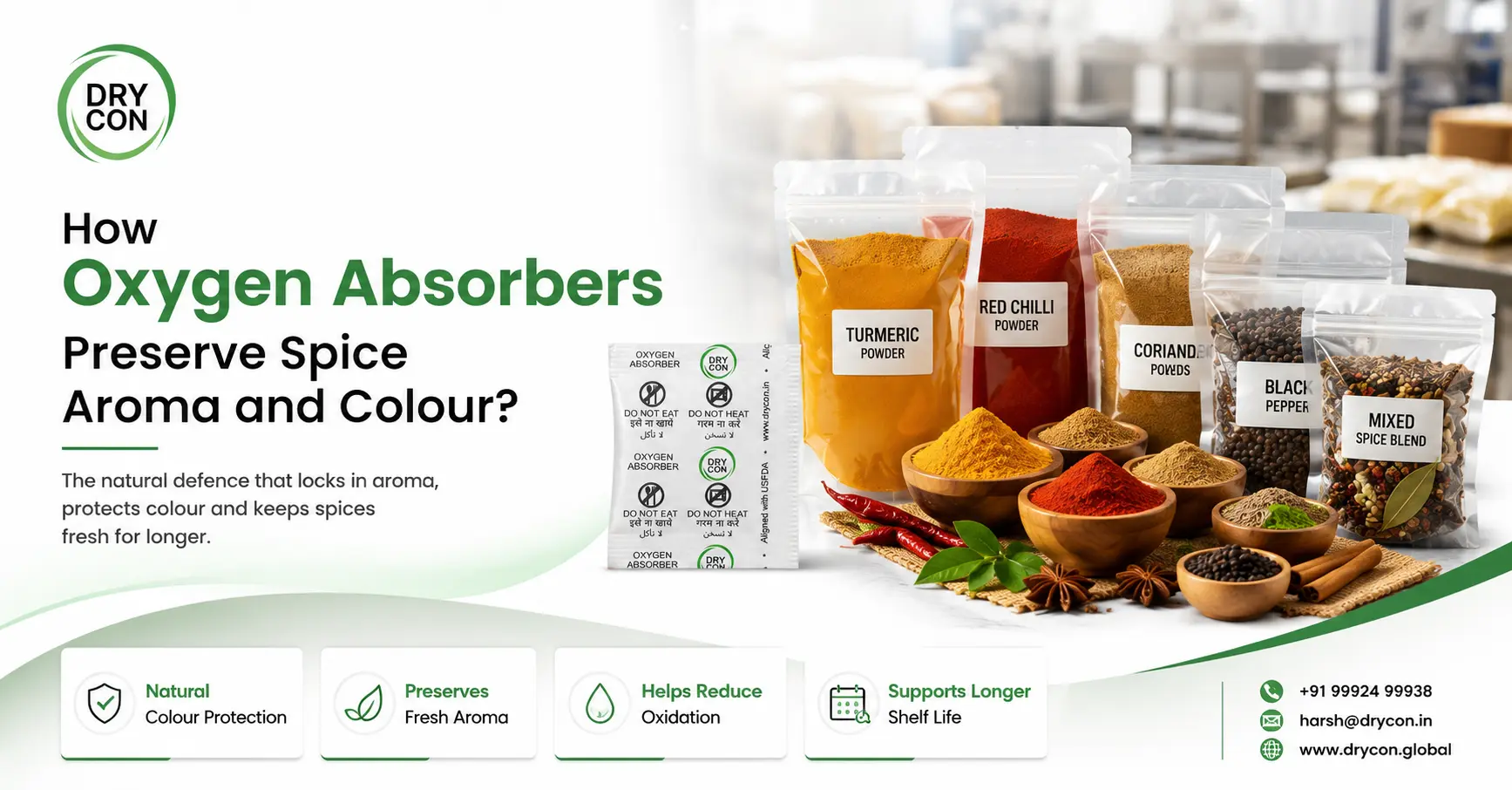
Oxygen absorbers for spices do play a huge part in keeping packed spices in good shape. They work by taking out the oxygen that ends up trapped inside sealed packs, and then they slow down oxidation.
That oxidation is basically the reason natural colors can start to fade, the aroma can get a little messed around, and the overall taste can end up weaker as time goes on. And when they’re paired with the right packaging materials, they can sort of help hold the spice quality steady from the production line right up to the consumer’s kitchen.
For manufacturers and exporters , it’s not just some shelf life thing. A lot of products travel really far , and they spend time in warehouses for weeks, sometimes even months, then they face different climate conditions before they finally get to retailers. During all that waiting , even a small amount of residual oxygen inside the pack can quietly shift the appearance and the sensory side of the spices.
This guide walks through how Oxygen absorbers work, why they’re becoming almost a must-have in modern spice packaging, and what procurement teams should pay attention to when picking the right product, and of course the right supplier.
You will also get practical packaging recommendations, a few common purchasing errors to watch for, plus how the right oxygen absorber can help maintain consistent product quality across both domestic and export markets.
Why Oxygen Is One of the Biggest Enemies of Packaged Spices?
Most manufacturers pay pretty close attention to moisture, hygiene, and packaging strength. Those things matter, sure. But oxygen is like the quiet problem that keeps working even after the package is sealed.
Basically, every sealed pouch or container holds some trapped air. And air is roughly 21% oxygen, so unless someone removes it on purpose, that oxygen just stays in there. Over time, it starts reacting with the spice’s natural oils, pigments, and the flavor compounds that make the product actually taste different.
Oxidation in packed spices, can bring out a few unpleasant results, like:
- aroma fades, and it doesn’t smell “right” anymore
- colors lose that vibrant look
- flavor intensity goes down gradually
- essential oils break down
- customer satisfaction drops
And it’s not always immediate either. At first glance a spice might still seem totally fine, but later on customers notice it smells weaker, or it tastes less fresh then they expected.
Also Read : Oxygen Absorber Manufacturer Evaluation Guide for Food Packaging Buyers
For suppliers who ship to retailers, food service kitchens , or export markets, this turns into inconsistent quality, more complaints, and honestly avoidable waste.
DryCon Experience Insight
A lot of buyers think moisture is the main culprit when spices lose quality. But moisture and oxygen don’t work the same way. Moisture can cause clumping or even microbial growth, while oxygen slowly breaks down the compounds responsible for aroma, flavor, and natural color. Good spice packaging protects against both moisture and oxygen, not just one.
Why Oxygen Control Matters More Than Moisture Alone?
A lot of manufacturers have been using desiccants to manage moisture inside food packages. Moisture control is important, yet it doesn’t really stop oxidation, not fully at least.
Spices, even if they’re totally dry, still carry volatile oils and plant pigments that remain touchy to oxygen. So even when the pack is low on moisture, it can still fade aroma and color over time, simply because oxygen is still hanging around.
That is why many modern spice packaging solutions combine high-barrier packaging materials with oxygen scavengers for spices. Together they cover moisture-related issues and oxygen-related oxidation, giving a more complete system for long-term quality.
DryCon’s Packaging Tip
An oxygen absorber performs best when used inside packaging with a low Oxygen Transmission Rate (OTR). If the packaging allows oxygen to pass through too easily, fresh oxygen will continuously enter the package, reducing the absorber’s long-term effectiveness. Choosing high-barrier packaging helps maximize shelf life and maintain product freshness.
What Are Oxygen Absorbers and How Do They Work?
Oxygen absorbers for food packaging are these small sachets really made to pull oxygen out of a sealed package. They work by dropping the oxygen amount so oxidation kind of slows, and that helps preserve the first, original quality of dry foods, like spices and stuff.
Most food grade oxygen absorbers use iron powder. After the package is sealed, the iron does its thing and reacts with oxygen on its own, naturally.
Also, they’re different from preservatives. Oxygen absorbers are not mixed into the food. They sit in a separate sachet and do their job by changing the atmosphere inside the container.
Used the right way, oxygen absorbers help protect things like:
- Natural essential oils
- Fragile aroma compounds
- Stable flavor profile
- Color pigments
- Overall product freshness
So for spice freshness preservation, especially when products sit for a while or move through several distribution steps, it’s a pretty strong solution.
How Oxygen Absorbers Preserve Spice Aroma?
A spice aroma comes from a bunch of natural essential oils plus a few small volatile molecules and you know, that kind of stuff. It’s what makes black pepper feel kind of sharp , cardamom gives off that sweet perfumed note and cumin shows up with an earthy aroma.
Even when spices are dried and then packed up, those compounds don’t just stop. They can keep reacting with the oxygen that got trapped inside the package, kind of in the background. This whole thing is called oxidation, and over time it gently pulls the strength out of the smell.
That’s something a lot of food makers already know. When a spice is freshly packed it tends to smell rich and intense, but after a few months sitting in storage, it can look basically the same, while the fragrance is clearly weaker.
Oxygen absorbers for spices help with this, by taking away oxygen before it gets the chance to react with those delicate aroma compounds. With less oxygen around, oxidation slows down a lot, so the spices keep their natural aroma longer, and it’s not such a fade.
This becomes even more useful for items that hang around for a while in warehouses, distribution hubs, or export containers. Long timelines like that can really test a spice’s freshness.
Which spices need aroma protection most?
Most dried spices benefit from oxygen control, sure, but a few types hold more volatile oils, so they can lose aroma faster if they sit too long.
Common examples include:
- Black pepper
- Cardamom
- Cumin
- Coriander
- Clove
- Cinnamon
- Nutmeg
- Garam masala
- Mixed seasoning blends
For premium spice brands, preserving the aroma is just as important as keeping the appearance. People often decide something is “fresh” by smell first, before they even take a taste.
DryCon’s Experience Insight
Ground spices have a much larger surface area than whole spices, making them significantly more susceptible to oxidation. As a result, they lose their aroma, flavor, and natural color more quickly. To preserve freshness and extend shelf life, ground spices typically require stronger oxygen protection than whole spices.
Why Packaging Material Is Just as Important?
An oxygen absorber it’s only good for removing the oxygen that is already sitting inside a sealed package. It cannot magically stop new oxygen from drifting in, if the packaging material doesn’t have the right barrier, kind of properties.
This is why packaging design and oxygen control really should go together, not like separate things on a checklist
For keeping spice aromas around long term, many manufacturers end up picking packaging materials with low oxygen transmission rates (OTR). Those materials help keep the low-oxygen atmosphere that the absorber sets up in the first place.
You’ll often see high-barrier packaging as laminated films, because those combine multiple layers to push back against oxygen, moisture, and even light.
Also Read : Foods That Need Oxygen Absorbers and Which Foods Should Never Use Them
When teams are looking at spice packaging technology, procurement folks should probably weigh things like
- Oxygen barrier performance
- Moisture barrier properties
- Heat seal strength
- Puncture resistance
- Compatibility with automated filling lines
- Storage and distribution conditions
If you just choose an oxygen absorber and skip the packaging evaluation you can get results that feel inconsistent, or almost “random”, depending on the batch.
How Oxygen Absorbers Prevent Spice Discoloration?
Color is one of the earliest cues buyers use, to decide if spices are really high quality.
Bright red chili powder, deep yellow turmeric, and lively paprika help customers feel confident the product is fresh, and processed properly. But once those colors start to fade, people tend to think the spice is old, even when it’s still safe to eat
A lot of the time oxygen is the driver behind that slow color loss.
Natural pigments in spices do react with oxygen during storage. Over time, oxidation keeps progressing, and the pigments break down little by little. That makes the original shade look less intense.
You’ll notice it more with spices that depend on natural plant pigments.
Spice |
Natural Pigment |
Common Effect of Oxidation |
|---|---|---|
| Turmeric | Curcuminoids | Yellow color becomes dull |
| Chili Powder | Carotenoids | Bright red gradually fades |
| Paprika | Carotenoids | Reduced color intensity |
| Curry Blends | Mixed pigments | Uneven appearance over time |
Using food packaging oxygen absorbers helps slow down those oxidation reactions, because there’s less oxygen available inside the pack. The upside is steadier spice color, so the product looks more consistent across storage and transportation
Why Color Consistency Matters for Manufacturers?
Keeping color stable is more than just a pretty look. For food manufacturers, and also exporters, color consistency has a direct effect on product acceptance and even brand perception
Imagine two packages of the same chili powder. Both are made from the same raw material. One stays bright red after a few months. The other one looks faded, simply because oxygen slowly degraded the pigments during storage. Most customers will pick the one that looks brighter, even if both are still safe.
For manufacturers, this can snowball into things like,
- Retail shelf appeal
- Customer confidence
- Repeat purchases
- Brand reputation
- Product acceptance in export markets
So protecting color becomes part of maintaining consistent product quality, not just marketing gloss or labeling decoration.
How to Choose the Right Oxygen Absorber for Your Spice Freshness Packaging?
Choosing the right Oxygen Absorbers for Spices is just as important as choosing the right packaging material. Different spice products and packaging formats require different oxygen absorption capacities to deliver consistent protection throughout storage and transportation.
1. Package Size
The amount of air that gets trapped inside a package tends to grow along with the package size. And, more trapped air means more oxygen that actually needs to be taken out. So, larger spice packs usually require oxygen absorbers with a higher absorption capacity compared with smaller retail ones. Picking the right capacity matters because it helps keep a calmer, low-oxygen atmosphere across the product’s shelf life.
2. Headspace Inside the Package
Headspace is the empty region between the spice and the upper part of the package. It might feel small, but that space still holds oxygen, and it can gradually start changing the product. In general, packages with more headspace will need a stronger oxygen absorber capacity. Cutting down on extra headspace, while still keeping efficient filling operations, can also make the overall packaging process work better, even if it sounds like a minor tweak.
3. Type and Form of the Spice
Not all spices “behave” the same when oxygen is around. Whole spices, like black pepper or cloves, generally trap less air. Since their structure doesn’t create as many pockets. Also Oxygen absorber for turmeric powder, chili powder, coriander powder, and spice blends tend to include tiny air pockets between the particles, so you end up with more oxygen inside the pack. So understanding the physical form of the spice is basically the starting point for deciding what oxygen absorber capacity fits best.
4. Packaging Material
An oxygen absorber tends to do its best when it’s paired with packaging that gives a solid oxygen barrier. High-barrier laminated pouches help keep the low-oxygen setting that the absorber creates. If the package isn’t very protective, oxygen can slip in over time, and then it kind of defeats the whole purpose. When picking packaging materials, manufacturers should weigh things like: oxygen barrier performance (OTR), moisture barrier performance (MVTR) , seal integrity, and the overall laminate quality. In short, a well-thought-out packaging system blends the right oxygen absorber with the right packaging material, not just one or the other.
5. Intended Shelf Life and Distribution
A spice product sold locally might reach shoppers in only a few weeks. At the same time, spices that are exported spend several months in warehouses, inside shipping containers, and while they’re being handled by retail distribution.
Because of that, the oxygen absorber should be picked by looking at the product’s full path, starting from manufacturing through storage, transportation, and even the retail shelf. If you plan for the whole distribution cycle, it’s simpler to keep a steady aroma, color, and flavor until the package finally gets opened.
DryCon’s Procurement Insight
Oxygen absorbers account for only a small portion of overall packaging costs, but their performance has a significant impact on product quality. Inconsistent oxygen control can lead to spoilage, customer complaints, product returns, and rejected shipments. Investing in reliable, high-quality oxygen absorber sachets helps reduce long-term costs, protect your brand reputation, and ensure consistent product freshness throughout the supply chain.
Extending Spice Shelf Life with Oxygen Absorbers
Spices basically have a natural shelf life , but yes, the packaging matters a lot for how good they stay during that whole time. Even after they’ve been processed, spices still keep reacting with the oxygen that’s sitting trapped inside the package. Over time that can make the aroma weaker, the natural colors look kind of washed out, and the flavor overall gets less lively, you know.
That’s where oxygen absorbers for spices come in, they help slow down oxidation. When you reduce the oxygen level inside the pack, you end up with a steadier environment that supports spice shelf life extension, without changing the product itself.
Still, oxygen absorbers usually work best when they’re used as part of a complete packaging system, not just as a lone add-on.
A well planned spice package typically combines:
- High-barrier packaging materials
- Proper heat sealing
- Suitable oxygen absorber capacity
- Controlled storage conditions
- Good manufacturing and handling practices
When those pieces line up, manufacturers can protect product quality from production all the way to consumption.
DryCon’s Experience Insight
When planning product shelf life, don’t focus only on the time your products spend in your warehouse. Every stage of the supply chain including export shipping, distributor storage, and retail shelf display consumes a portion of the product’s usable shelf life before it even reaches the consumer. Factoring in the entire distribution journey helps ensure products remain fresh, safe, and high quality until the moment they’re opened.
Oxygen Absorbers For Turmeric and Chili Powder
Not every spice reacts to oxygen the same way… some are just more fragile than others because honestly a lot of their market price comes from how they look , smell, and taste. Turmeric and chili powder are basically two of the clearest examples.
Spice |
Packaging & Preservation Insights |
|---|---|
| Turmeric |
|
| Chili Powder |
|
Preserving Spice Freshness During Storage
Protecting spices starts before the consumer ever sees the jar or pouch. What happens during production and how products are stored affects freshness long after packaging too.
One big common mistake is waiting too long to package after grinding. Like, once the spices are ground they basically have a larger surface area sitting out in the open air , so oxidation starts faster than you’d expect. If you pack soon after processing , you help slow that down, and you preserve more of the natural qualities intact, not just the flavor.
Another thing people sometimes overlook is how oxygen absorbers are managed during production. Once the master pack is opened, the sachets start reacting with oxygen in the nearby air right away. If those sachets sit around on the packaging line for extended periods, their absorption capacity can be used up before they even go into the finished package.
Manufacturers should also keep warehouse routines strong, like:
- Storing spices in cool , dry conditions
- Keeping products out of direct sunlight
- Using first-in, first-out (FIFO) inventory management
- Checking package seals regularly
- Following the recommended storage conditions for unused oxygen absorbers
These steps help hold onto spice freshness through production, storage, and shipping.
DryCon’s Production Tip
Oxygen absorbers deliver the best performance when integrated into an efficient packaging process. Minimize the time between opening the absorber packet, placing the sachet inside the package, and sealing it. Faster handling reduces premature oxygen exposure, helping the absorber maintain its full capacity and provide maximum protection for product freshness and shelf life.
Spice Packaging Methods to Maintain Flavor
Keeping flavor is not just a matter of throwing an oxygen absorber inside. It depends on choosing the right packaging system for the spice, the expected shelf life , and how the product is distributed.
Different packaging options protect spices in different ways , so manufacturers often match the method to the risk:
Packaging Method |
Primary Purpose |
Best Suited For |
|---|---|---|
| High-Barrier Laminated Pouches | Reduce oxygen and moisture transmission. | Retail packaging and export shipments. |
| Oxygen Absorbers | Remove residual oxygen trapped inside sealed packages. | Ground spices, spice blends, and seasoning mixes. |
| Desiccants | Control excess moisture and humidity. | Moisture-sensitive food and spice products. |
| Nitrogen Flushing | Replace oxygen with nitrogen during packaging. | Premium packaged foods and selected spice applications. |
| Vacuum Packaging | Reduce the amount of air inside the package. | Selected whole spice applications. |
In many cases, more than one method gets combined, because a single layer rarely covers everything perfectly. For instance, a laminated pouch with a high oxygen barrier can block outside oxygen from entering. Then an oxygen absorber handles the oxygen that remains trapped after sealing.
If moisture control is also required, a desiccant may be added where it makes sense. So the best combination depends on the product itself, not any one method that works for everything mindset.
Oxygen Absorbers for Spices (Packed)
Oxygen absorbers show up across different spice categories, mainly because each spice creates its own packaging issues.
High-Priority Applications |
Aroma-Sensitive Products |
Whole Spices |
|---|---|---|
| These products rely heavily on maintaining their natural color and visual appeal, making oxygen protection essential for preserving product quality. |
These spices contain high levels of essential oils responsible for their aroma and flavor. Oxygen exposure gradually reduces their sensory quality. |
Whole spices oxidize more slowly than powders, but they often remain in storage longer. Oxygen absorbers help preserve natural aroma, freshness and shelf life. |
|
|
|
For manufacturers making multiple spice products, choosing oxygen absorbers based on product type, packaging format, and expected shelf life helps keep a more consistent packaging approach across the full range.
Why Manufacturer Selection Matters?
An oxygen absorber can look like a little sachet, but honestly its performance depends on how consistently it gets made. Even small shifts in raw materials, filling precision, packaging build, or storage conditions can mess with how well it takes oxygen out once it’s in a sealed package. And yes, you may not notice right away, but over time the effect shows up, like in how stable the product stays.
For food manufacturers, consistency matters just as much as raw performance. Each production batch should deliver the same level of protection, otherwise you end up with unexpected product quality.
When you evaluate an oxygen absorber manufacturer, try not to stop at the product description. A dependable manufacturer should also back up your packaging workflow with practical technical know-how, plus proper quality documents.
Key factors to consider:
- Consistent oxygen absorption capacity: Every sachet should work exactly as claimed, so protection stays uniform across production batches.
- Food-grade materials: The sachet material should fit food packaging use , and it should be built with food-safe materials.
- Technical documentation: Product specs, use instructions, and storage directions should be easy to access.
- Batch traceability: Batch ID makes it easier to keep quality records, and it supports troubleshooting if something goes off during packaging.
- Protective packaging: Oxygen absorbers should come in moisture-resistant master packaging so they don’t start working too early during storage.
- Technical support: An experienced supplier can help you choose the right oxygen absorber capacity, based on your product and your actual packaging needs.
Choose a manufacturer who delivers both reliable product quality and real technical guidance to reduce uncertainty, especially during product development and later commercial production.
Generic Supplier VS DryCon
Feature |
DryCon |
Generic Supplier |
|---|---|---|
| Oxygen Absorption Capacity | ✔ Clearly defined and consistent | May vary between batches |
| Product Selection Guidance | ✔ Capacity recommendations based on application | Limited application support |
| Technical Documentation | ✔ Comprehensive product data and usage instructions | Basic or incomplete information |
| Food-Grade Packaging Materials | ✔ Suitable for food packaging applications | Documentation may be limited |
| Batch Traceability | ✔ Available for quality assurance | Often unavailable |
| Packaging Quality | ✔ Moisture-resistant master packaging | Packaging quality may vary |
| Manufacturing Consistency | ✔ Controlled production processes | Inconsistent production quality |
| After-Sales Technical Support | ✔ Implementation and troubleshooting assistance | Limited support after purchase |
Checklist Before Choosing an Oxygen Absorber Manufacturer
Before you sign with an oxygen absorber supplier, double-check these items:
☐ Does the manufacturer offer oxygen absorbers in multiple capacities for different packing requirements?
☐ Are the products made for food packaging applications?
☐ Can the supplier point you to the right oxygen absorber based on your product, and the packaging size?
☐ Are technical data sheets and storage instructions available?
☐ Is every production batch traceable?
☐ Are the oxygen absorbers packed in protective, moisture-resistant packaging?
☐ Does the supplier keep manufacturing standards consistent?
☐ Can they provide technical help during packaging trials?
☐ Do they understand the packaging headaches of spices, and other dry food products?
☐ Can they support both domestic packaging and export packaging needs?
DryCon answers these questions clearly to support consistent packaging performance long term.
Also Read : Benefits of Using Oxygen Absorbers in Food Packaging for Long Term Storage
Red Flags to Watch Before Buying Oxygen Absorbers
Not every oxygen absorber on the market performs the same, and reliability can vary more than people expect. Choosing only by price can backfire, because the packaging issues might only appear after the product is already out in the market.
Be extra careful if a supplier can’t explain clearly:
- The oxygen absorption capacity of their products
- How to select the correct capacity for your setup
- Recommended storage conditions before use
- Product shelf life before opening
- Batch identification and traceability
- Technical documentation, or product specifications
- Packaging recommendations for different use cases
Another warning signal is inconsistent packaging of the oxygen absorbers themselves. If the master packaging isn’t sealed properly, the sachets may start pulling oxygen while they’re still being stored, so when production begins, the effectiveness drops. Working with a manufacturer like DryCon offers transparent technical guidance and steady product quality helps reduce those risks.