



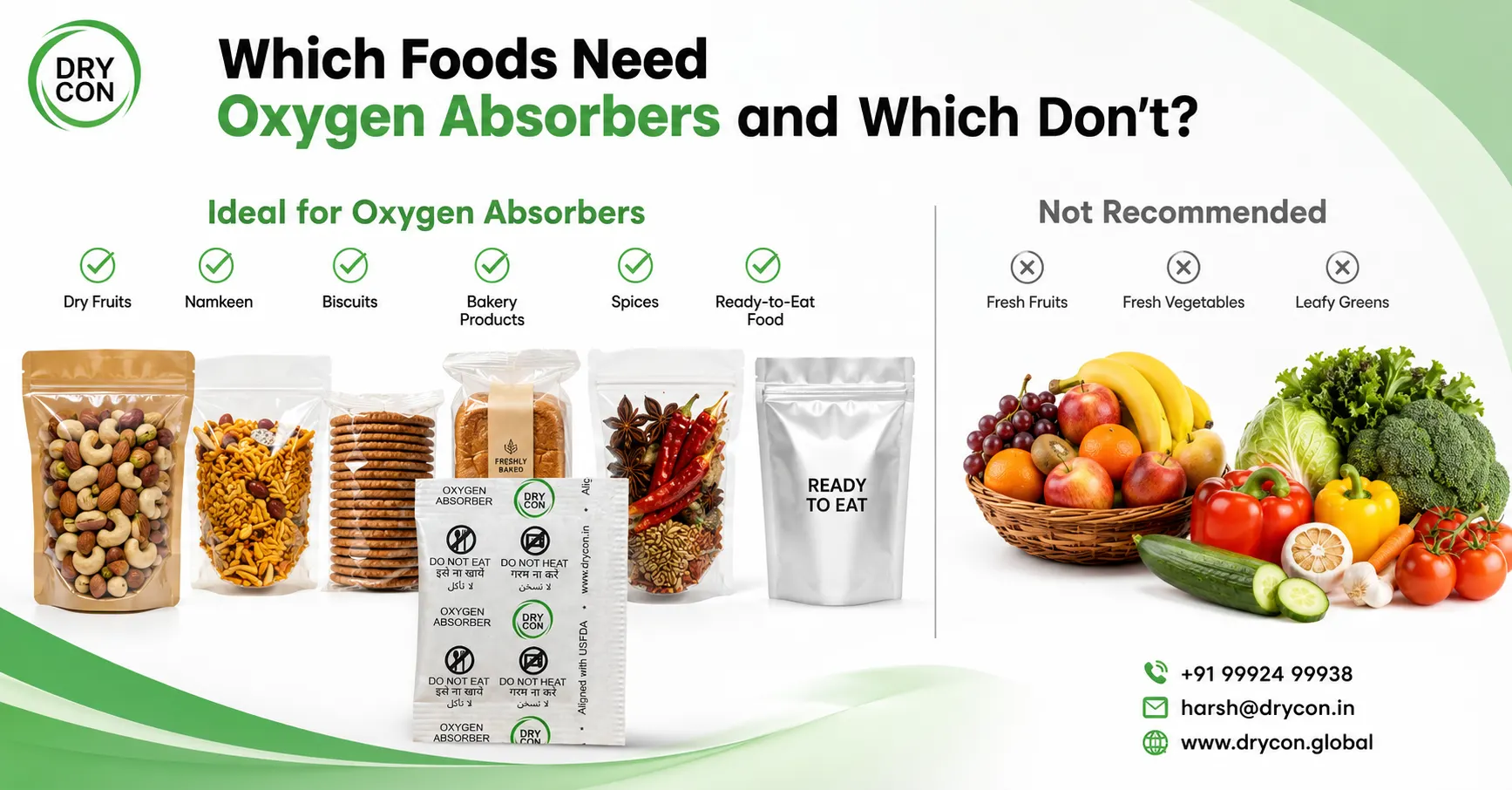
Foods that need oxygen absorbers are often the same foods that people assume are safe because they look dry. A lot of food manufacturers put serious effort into moisture, temperature, and packaging design. But one big cause of quality slipping over time, often gets kind of ignored, and that reason is oxygen.
Even those “dry” foods keep reacting with oxygen while they are kept in storage, warehouses shipping containers, and also on store shelves. Bit by bit, oxygen can reduce flavor, dull colors, harm nutrients, spoil fats and oils, and it can even allow insects to keep on surviving inside the package, somehow.
For exporters, the whole problem gets bigger. Products might spend weeks or months moving through different climates, ports, warehouses, and distribution centers before they finally reach the customers. This is where oxygen absorbers for food storage become a critical packaging component.
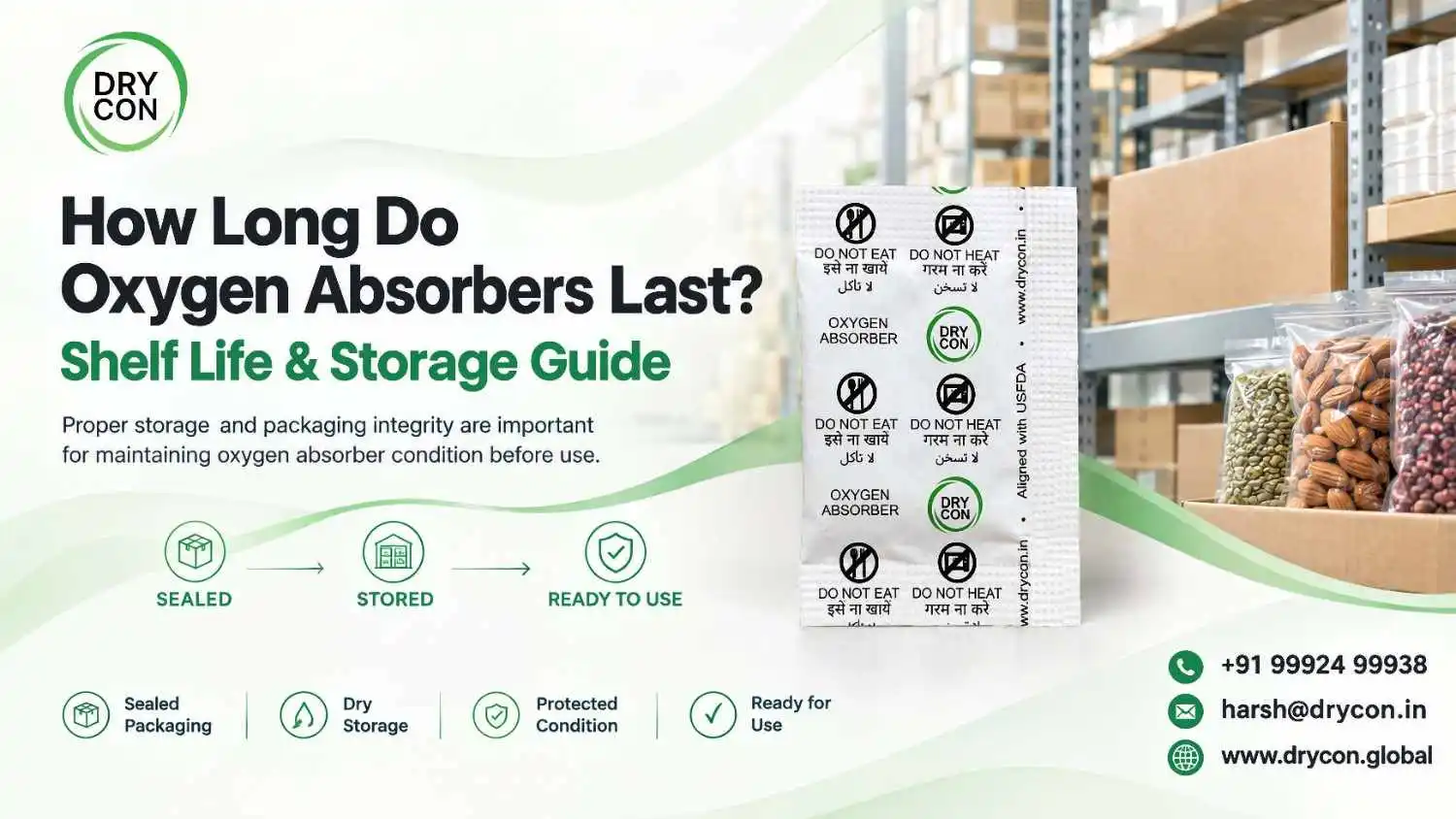
Unlike desiccants that take away moisture , oxygen absorber packets sort of go further and actively pull out residual oxygen that is stuck in the package headspace and also oxygen that can slowly seep through packaging materials over time. So you end up with slower oxidation, less insect activity, better color keeping, and a longer shelf life.
Which Foods Require Oxygen Absorbers for Storage?
For oxygen absorbers, the best match is usually low moisture foods, with a water activity below about 0.60. At these moisture levels, bacteria generally can’t grow , meaning oxygen becomes the main reason the product degrades.
Food |
Recommended |
Why |
Typical Storage Duration |
|---|---|---|---|
| White Rice | Yes | Prevents insects and oxidation | 10–25 years |
| Dry Beans | Yes | Protects against weevils and oxygen damage | 10–20 years |
| Wheat | Yes | Reduces insect activity | 15–25 years |
| Spices | Yes | Preserves aroma compounds | 2–5 years |
| Dehydrated Vegetables | Yes | Maintains color and flavor | 5–10 years |
| Tea | Yes | Protects volatile flavor compounds | 2–3 years |
| Coffee Beans | Yes | Reduces oxidation of oils | 6–18 months |
| Pet Food | Yes | Prevents fat rancidity | 12–24 months |
| Nutraceutical Powders | Yes | Preserves active ingredients | Product dependent |
For commercial food processors, oxygen absorbers for grains are among the most common industrial applications because insect eggs already present in grain products cannot survive in low-oxygen environments.
This is particularly valuable for rice exporters shipping containers through tropical climates where insect activity accelerates rapidly.
Can Oxygen Absorbers Be Used with All Foods?
No, this is one of the more misunderstood parts about oxygen absorber food packaging. Oxygen absorbers are made especially for low moisture foods, so, when people throw them at products that are already damp, it gets weird fast.
High moisture content can turn risky in oxygen-free packaging because anaerobic pathogens may start to grow when oxygen is basically gone. The most often-cited danger is the rise of Clostridium botulinum, it actually does best in low oxygen, and high moisture settings.
As a practical rule:
- Water activity below 0.60 → generally suitable.
- Water activity above 0.85 → generally unsuitable.
- Products between 0.60 and 0.85 require technical evaluation.
Commercial manufacturers often validate this using laboratory water activity measurements rather than moisture percentage alone. Two products may contain identical moisture levels but behave completely differently from a microbiological perspective.
Also Read : Silica Gel Pouch vs Oxygen Absorbers: Practical Difference for Packaging Safety
Foods That Should Not Be Stored with Oxygen Absorbers
Certain foods are poor candidates for oxygen scavengers for food packaging.
Food |
Reason |
Better Alternative |
|---|---|---|
| Fresh Fruits | High moisture content | Refrigeration |
| Fresh Vegetables | Microbial risk | Cold chain storage |
| Soft Cheese | Requires controlled atmosphere | Refrigeration |
| Fresh Meat | Requires specialized packaging systems | Vacuum packaging |
| Moist Bakery Products | Risk of anaerobic microbial growth | Modified Atmosphere Packaging (MAP) |
| Fresh Pasta | High water activity | Refrigeration |
| Pickles | Moisture and acidity considerations | Glass jars with pasteurization |
| Fresh Juices | Not suitable for oxygen scavengers | Cold chain distribution |
Foods not suitable for oxygen absorbers generally benefit more from:
- Refrigeration
- Modified atmosphere packaging
- Vacuum packaging
- Nitrogen flushing
- Thermal processing
Many ready-to-eat food companies combine multiple preservation methods rather than relying on a single packaging intervention.
How Oxygen Absorbers Extend Food Shelf Life?
Oxygen affects food through several mechanisms simultaneously.
1. Oxidative rancidity
Fats and oils react with oxygen, producing off-flavors and unpleasant odors.
This is particularly problematic for:
- Dry fruits
- Nuts
- Pet foods
- Bakery ingredients
- Nutritional powders
2. Color degradation
Natural pigments oxidize during storage.
Examples include:
- Paprika losing redness.
- Green tea turning brown.
- Herbal powders fading.
- Freeze-dried fruits becoming dull.
3. Nutrient destruction
Several vitamins are highly oxygen sensitive.
These include:
- Vitamin A
- Vitamin C
- Vitamin E
Nutraceutical manufacturers often use oxygen absorbers so that the active ingredient potency stays strong during the entire shelf life, even when conditions vary a bit. In a way its like a quiet stabilizer for the formula, keeping things from degrading too quickly .
4. Insect control
Many insects cannot survive in oxygen levels below 0.1%. This is one reason long-term food storage oxygen absorbers are widely used in grains and pulses.
5. Mold inhibition
Even though oxygen absorbers don’t actually remove all the moisture, they do reduce that aerobic mold growth, by limiting oxygen availability. So in a way, the moisture is still around , but the mold doesn’t have the same oxygen, to really take off.
Also Read : 15 Practical Benefits of Using Oxygen Absorbers in Food Packaging for Long Term Storage
Oxygen Absorbers for Rice and Beans
Rice and beans represent one of the largest commercial applications for oxygen absorber packets worldwide. Rice exporters often face several challenges:
- Ocean transit exceeding 45 days.
- Storage in humid port environments.
- Multiple loading and unloading cycles.
- Temperature fluctuations inside containers.
Even if the moisture level looks ok , residual oxygen can still aid insect activity and oxidation. That’s why oxygen absorbers for rice, grain and similar staples are quite effective, they reduce those risks a lot.
Packaging systems commonly include:
- Multi-layer laminated bags.
- Mylar bags with oxygen absorbers.
- Vacuum packaging.
- Nitrogen flushing.
White rice performs particularly well because of its low fat content. Brown rice, however, comes with higher oil levels in the bran layer, so it tends to have a shorter keeping life even while oxygen levels are managed , pretty tightly.
Beans, lentils, chickpeas, and pulses show kind of the same advantages too. Many large batch processors say they notice fewer insect issues after moving to oxygen scavenger technology.
Are Oxygen Absorbers Safe for Food Packaging?
Yes. Commercial oxygen absorbers used in food packaging are considered safe when manufactured according to food-contact packaging standards.
Most oxygen absorber packets use iron powder technology. When exposed to oxygen, the iron oxidizes and permanently removes oxygen from the package atmosphere.
The process is similar to controlled rust formation. The contents remain sealed inside the sachet and never contact the food directly.
Food manufacturers should ensure that:
- Sachets are food-grade certified.
- Packaging materials meet food-contact regulations.
- Absorber capacity matches package volume and product characteristics.
Oversized absorbers generally create no issue, but undersized absorbers may leave residual oxygen that compromises performance.
Oxygen Absorbers vs Silica Gel for Food Storage
These technologies solve completely different problems. Many manufacturers mistakenly substitute one for the other.
Feature |
Oxygen Absorbers |
Silica Gel |
|---|---|---|
| Removes Oxygen | ✔ Yes | ✖ No |
| Removes Moisture | ✖ No | ✔ Yes |
| Controls Oxidation | ✔ Yes | ✖ No |
| Prevents Rancidity | ✔ Yes | Limited |
| Controls Condensation | ✖ No | ✔ Yes |
| Controls Insects | ✔ Yes | ✖ No |
| Protects Against Corrosion | ✖ No | ✔ Yes |
The choice depends on the primary deterioration mechanism.
For example:
- Coffee packaging often benefits from oxygen absorbers.
- Electronics require desiccants.
- Export shipments may require both.
Many food exporters use a dual-protection strategy combining oxygen scavengers inside primary packaging with container desiccants inside shipping containers. This protects products against both oxidation and moisture migration during long transit periods.
Best Oxygen Absorbers for Dry Food Preservation
Selecting the best foods for oxygen absorbers involves more than identifying the product category. Manufacturers should evaluate:
1. Packaging material oxygen transmission rate (OTR)
Every packaging material allows oxygen ingress at a measurable rate. Polyethylene bags usually let more oxygen through than multilayer foil laminate packs, kind of unexpectedly. In contrast, high barrier packaging really boosts the oxygen absorber’s effectiveness a lot.
2. Package headspace volume
Larger air volumes require higher absorber capacity.
3. Product density
Powders, flakes, and granular products trap different amounts of residual oxygen.
4. Storage duration
Export packaging often requires larger safety margins than domestic distribution.
5. Environmental conditions
Products shipped through tropical shipping routes experience higher oxygen transmission rates because permeability increases with temperature. Commercial oxygen absorber sizing calculations therefore involve:
- Headspace oxygen volume.
- Dissolved oxygen.
- Packaging OTR.
- Target shelf life.
- Safety factors.
Professional suppliers typically perform these calculations for industrial customers rather than relying on generic sizing charts.
Common Packaging Mistakes Manufacturers Make
1. Using oxygen absorbers in ordinary polyethylene bags
The absorber removes oxygen initially, but the package rapidly allows oxygen back inside.
2. Ignoring water activity
A product may feel dry while still being unsuitable for oxygen scavengers.
3. Underestimating export conditions
Container temperatures can exceed 60°C during ocean transport.
4. Selecting sachets based only on package volume
Product characteristics significantly affect oxygen demand.
5. Opening absorber packs for extended periods during production
Once exposed to air, absorbers begin working immediately. Production line efficiency becomes critical.
Also Read : How To Choose The Right Desiccant Types for Smart Packaging Decisions?
Industry Applications
1. Spice manufacturers
Oxygen removal protects essential oils and aroma compounds.
2. Dry fruit exporters
Reduced oxygen slows fat oxidation and color changes.
3. Tea and coffee packaging
Volatile flavor compounds remain stable for longer periods.
4. Bakery ingredient suppliers
Premixes containing fats benefit from lower oxidation rates.
5. Pet food manufacturers
Fat-rich formulations remain fresher throughout distribution.
6. Nutraceutical manufacturers
Sensitive vitamins and active compounds tend to show lower degradation rates, generally speaking.
7. Ready-to-eat food producers
Oxygen scavengers often go along with nitrogen flushing and “modified atmosphere packaging” systems, too, and it can feel like they work in tandem.