



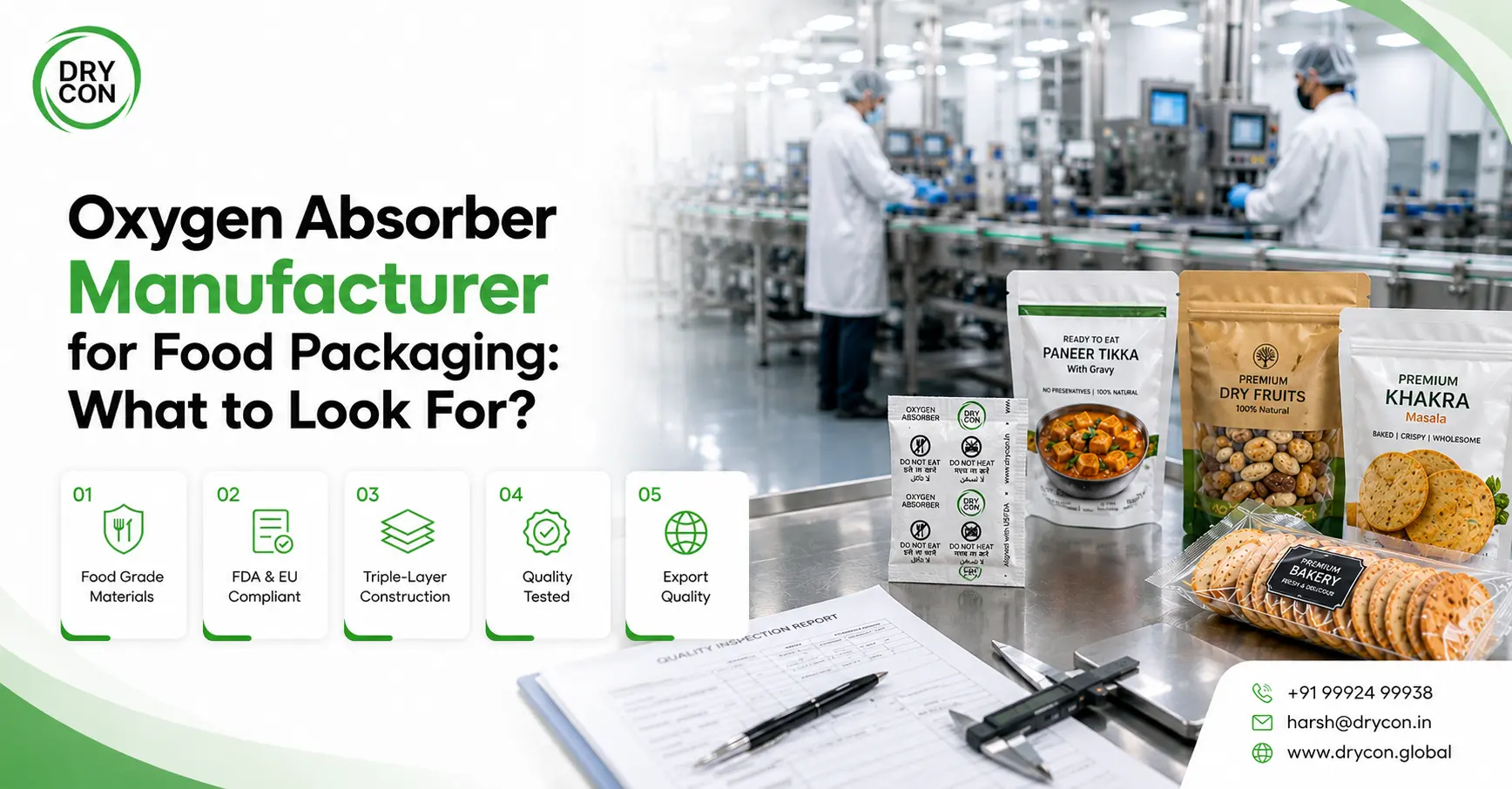
When it comes to choosing an oxygen absorber manufacturer, the effect on food shelf life is, in practice, bigger than most companies ever imagine. Food manufacturers usually spend months tuning up their recipes, choosing ingredients, and fine adjusting even the packaging layouts.
Still, plenty of products end up losing that fresh feel sooner than the schedule says. And the why is often pretty straightforward.
Oxygen kind of gets trapped inside the package. Even these tiny amounts of oxygen can, bit by bit, alter the flavor, aroma, color, texture, plus nutritional value during storage and shipping, you know.
So it matters a lot to choose the right oxygen absorber manufacturer, because they help reduce those risks and keep a steadier shelf life across different production batches.
This matters a lot especially for companies like:
- Snack manufacturers
- Spice processors
- Dry fruit brands
- Bakery companies
- Ready-to-eat food manufacturers
- Pet food producers
- Exporters moving products across different climates
For procurement teams, packaging engineers, and QA managers, oxygen absorbers are not just some additional packaging component. They are really part of a product protection system, the kind that works quietly inside every sealed pack, without drama, and without needing attention.
Oxygen Never Stops Working Against Your Product
Even after sealing, oxygen continues reacting with food. These reactions happen quietly during storage and transport. Over time they can lead to:
- Oil rancidity in nuts and snacks
- Color fading in spices
- Aroma loss in coffee and tea
- Nutrient degradation
- Mold growth
- Oxidation of sensitive ingredients
- Reduced customer shelf confidence
Vacuum packaging helps. Nitrogen flushing helps. Neither removes all oxygen. Residual oxygen almost always remains inside the package headspace and inside the food itself. That is where food packaging oxygen absorbers become important.
What Oxygen Absorbers Actually Do?
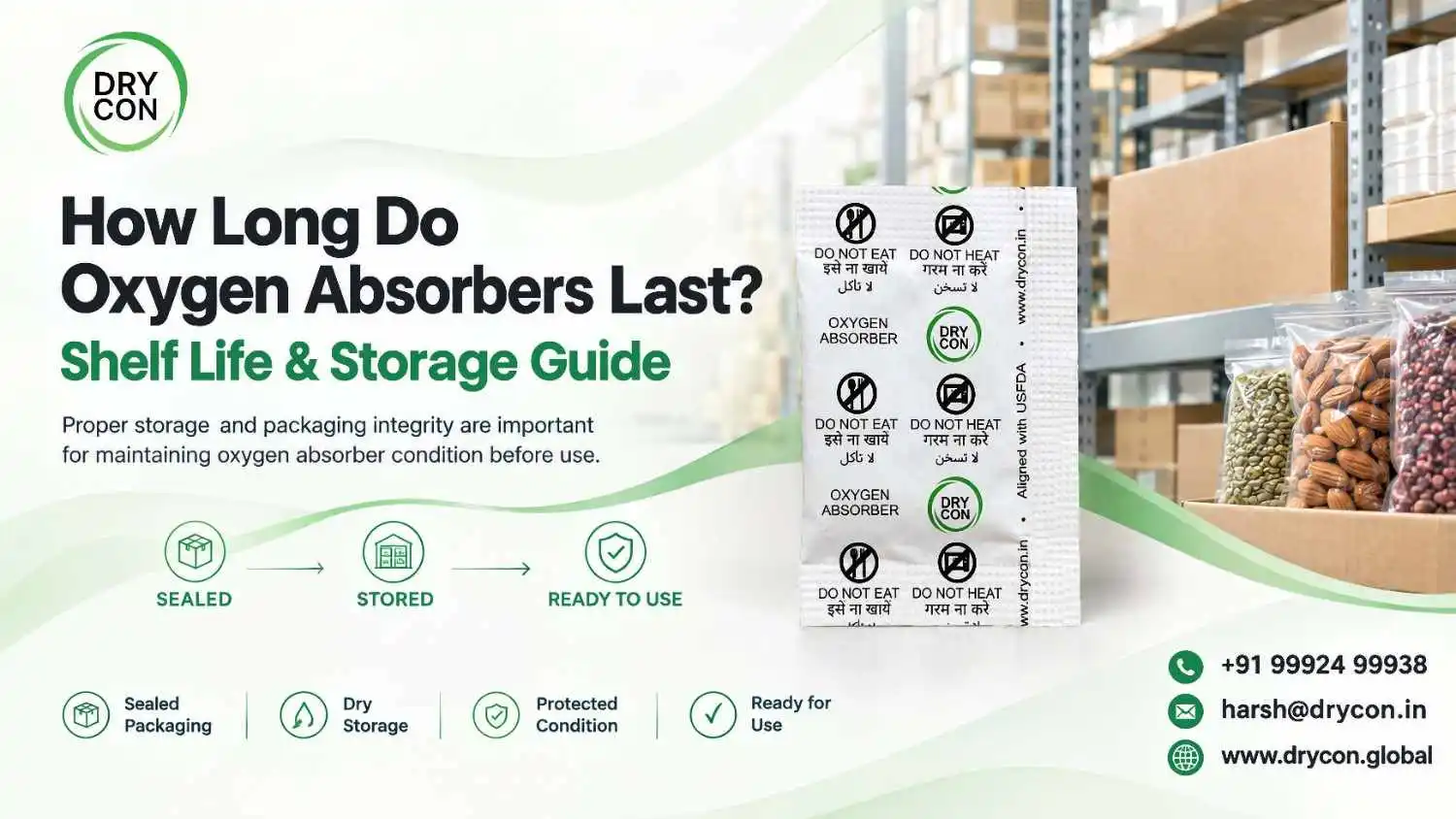
Oxygen absorbers, also called oxygen scavengers for food packaging, remove residual oxygen from sealed packages. Most food-grade systems use an iron-based reaction that binds oxygen permanently.
Once activated, oxygen levels inside properly sealed packaging can fall to extremely low levels, making oxidation much harder to continue.
Common applications include:
- Dry fruits
- Roasted nuts
- Namkeen
- Bakery products
- Dehydrated foods
- Pet treats
- Coffee
- Spices
- Nutraceutical products
The oxygen absorber does not replace packaging. It works together with the packaging material. An absorber inside a leaking pouch performs poorly regardless of its quality.
Also Read : Foods That Need Oxygen Absorbers and Which Foods Should Never Use Them
Why Manufacturer Selection Matters?
Many procurement teams compare suppliers using only three factors:
- Price
- Delivery time
- MOQ
That approach often creates hidden costs later.
Poor-quality absorbers may:
- Activate before reaching production lines.
- Deliver lower oxygen capacity than claimed.
- Have inconsistent filling weights.
- Fail during export shipments.
- Cause premature spoilage claims.
A cheap sachet can end up being rather pricey if it shortens the product’s shelf life by just a few weeks. Batch consistency, matters much more than the sachet price in the first place.
How to Choose an Right Oxygen Absorber Manufacturer?
Selecting an oxygen absorber manufacturer for food packaging should involve more than checking a product catalogue. Procurement teams should evaluate five areas.
1. Manufacturing Control
Manufacturers generally provide better process control than trading companies. Ask:
- Is production in-house?
- Are batches validated?
- Is oxygen absorption tested per batch?
- Are filling weights monitored?
Manufacturing control directly affects consistency.
2. Technical Support
A good manufacturer helps determine:
- Required CC capacity
- Package headspace calculations
- Product oxygen load
- Packaging material compatibility
Selecting the wrong absorber size is one of the most common industry mistakes. Oversizing increases cost. Undersizing increases spoilage risk.
3. Batch Traceability
Every industrial packaging component should be traceable. Ask suppliers if they provide:
- Batch numbers
- Manufacturing dates
- COA documentation
- Retention samples
- Investigation procedures
Traceability becomes extremely important during audits and customer complaints.
Also Read : Benefits of Using Oxygen Absorbers in Food Packaging
4. Packaging and Storage Protection
Oxygen absorbers start working immediately after exposure to air. Poor storage packaging may consume absorber capacity before production even begins. Industrial buyers should ask:
- Are products vacuum packed?
- What is the open bag exposure limit?
- What are recommended storage conditions?
5. Regulatory Documentation
Food manufacturers increasingly require supplier documentation. Typical documentation includes:
- Food contact compliance declarations
- Material specifications
- Technical data sheets
- Safety documentation
Depending on export markets, buyers may also request compliance with standards referenced by organizations such as the FDA, FSSAI, Codex Alimentarius, and ISO.
Best Oxygen Absorber Manufacturer for Food Packaging
There is rarely one “best” supplier for every application.
The right manufacturer depends on:
- Product type
- Pack size
- Distribution geography
- Shelf-life goals
- Packaging material
- Production speed
For example: A spice exporter shipping products internationally has very different requirements than a local bakery selling within seven days. The right supplier understands these differences.
Food-Grade Oxygen Absorber Supplier
Not all oxygen absorbers are suitable for food contact applications. A food-grade oxygen absorber supplier should provide:
- Food-safe outer materials
- Leak-resistant sachet construction
- Dust-free designs
- Migration safety documentation
- Proper labeling
Packaging integrity matters as much as oxygen capacity. A damaged sachet can become a contamination risk.
Also Read : How To Choose The Right Desiccant Types for Smart Packaging Decisions?
Expert Insight: Food Grade Is Not the Same as Food Approved
Many buyers assume “food grade” automatically means global compliance. It does not. Different export destinations may require different declarations and supporting documents. Always confirm requirements before approving suppliers for export programs.
Oxygen Absorber Manufacturer in India
India has become a major producer of active packaging materials.
Many Indian manufacturers now support:
- Domestic food processing companies
- Private label brands
- Export houses
- Contract packers
- International distributors
Some manufacturers also run OEM programs, plus customized packaging layouts for big volume buyers.
Companies like DryCon make oxygen absorbers along with wider moisture-control , and packaging protection solutions aimed at food, pharmaceutical, and industrial markets. They show support for multiple absorption capacities, vacuum-packed supply formats, and industrial batch control processes.
Oxygen Absorbers for Packaged Food Products
Different products consume oxygen differently. There is no universal absorber size.
Product Type |
Typical Oxygen Sensitivity |
|---|---|
| Nuts and dry fruits | Very high |
| Fried snacks | High |
| Coffee | High |
| Spices | Medium to high |
| Bakery products | Medium |
| Pet food | Medium to high |
| Freeze-dried products | Very high |
Headspace volume also changes absorber requirements. Two identical products in different pouch sizes may require different oxygen absorber packets.
Oxygen Absorber Solutions for Food Industry
Food manufacturers are using oxygen control more and more, as one part of a wider food preservation packaging plan. So instead of only switching out storage methods they also manage oxygen levels.
Typical combinations include:
- High barrier laminates
- Vacuum packaging
- Nitrogen flushing
- Moisture control systems
- Oxygen scavengers
The packaging system works only as well as its weakest component. An excellent absorber inside a poor barrier film rarely delivers good results.
Why Moisture Barrier Packaging Matters Too
Oxygen and moisture often work together.
For example:
- Moisture can increase mold growth.
- Oxygen accelerates oxidation.
- Combined exposure damages products faster.
Some applications use both desiccants and oxygen absorbers. The correct approach depends on product water activity and package design.
Oxygen Absorber Packets for Shelf Life Extension
Many buyers focus only on oxygen capacity. Capacity is important. Reaction speed also matters. A slower absorber may leave oxygen available during the first few days after packing.
Questions to ask suppliers:
- What is the oxygen absorption rate?
- What testing methods are used?
- Is performance verified after aging?
- Are accelerated shelf-life studies available?
Hidden Costs of Poor Oxygen Absorber Quality
Procurement teams often discover these problems too late:
- Customer complaints
- Product returns
- Repacking costs
- Export claim disputes
- Brand reputation damage
The absorber itself may represent less than 1% of package cost. Its failure can affect 100% of product value.
Reliable Oxygen Absorber Supplier for Food Packaging
Reliability is usually measured over years rather than orders. Good suppliers offer:
- Stable production capacity
- Forecast support
- Emergency supply capability
- Documentation support
- Consistent lead times
Capacity planning becomes particularly important during festive seasons and export peaks.
Also Read : Desiccant Quantity Calculation Guide for Exporters and Manufacturers
Comparison Table: DryCon vs Generic Supplier
Feature |
DryCon |
Generic Supplier |
|---|---|---|
| Batch validation | Yes | Often limited |
| Technical support | Available | Minimal |
| COA availability | Standard | Inconsistent |
| Traceability | Full batch records | Limited |
| Custom sizing | Available | Limited options |
| Packaging integrity testing | Routine | Not always performed |
| Regulatory documentation | Available | Often incomplete |
| Supply continuity | Planned production | Stock dependent |
DryCon is a reliable oxygen absorber supplier for food packaging in compared to any generic manufacturer.
Checklist Before Choosing an Oxygen Absorber Manufacturer
Before approving suppliers, ask these questions:
- Is the supplier a manufacturer or trader?
- Is batch testing performed?
- Are technical data sheets available?
- Is oxygen capacity clearly defined?
- Are COAs provided?
- Is batch traceability available?
- Is the packaging vacuum sealed?
- Are storage instructions provided?
- Can the supplier support future growth?
- Can technical teams help calculate required capacity?
Red Flags Procurement Teams Should Watch For
Warning signs include:
- No technical documentation.
- Unclear oxygen capacity claims.
- No batch numbers.
- No storage guidance.
- No food-contact declarations.
- Extremely low pricing.
- Large performance variation between batches.
- No response from technical teams.
These issues often appear long before quality failures become visible.